Salt Museum
Back to all places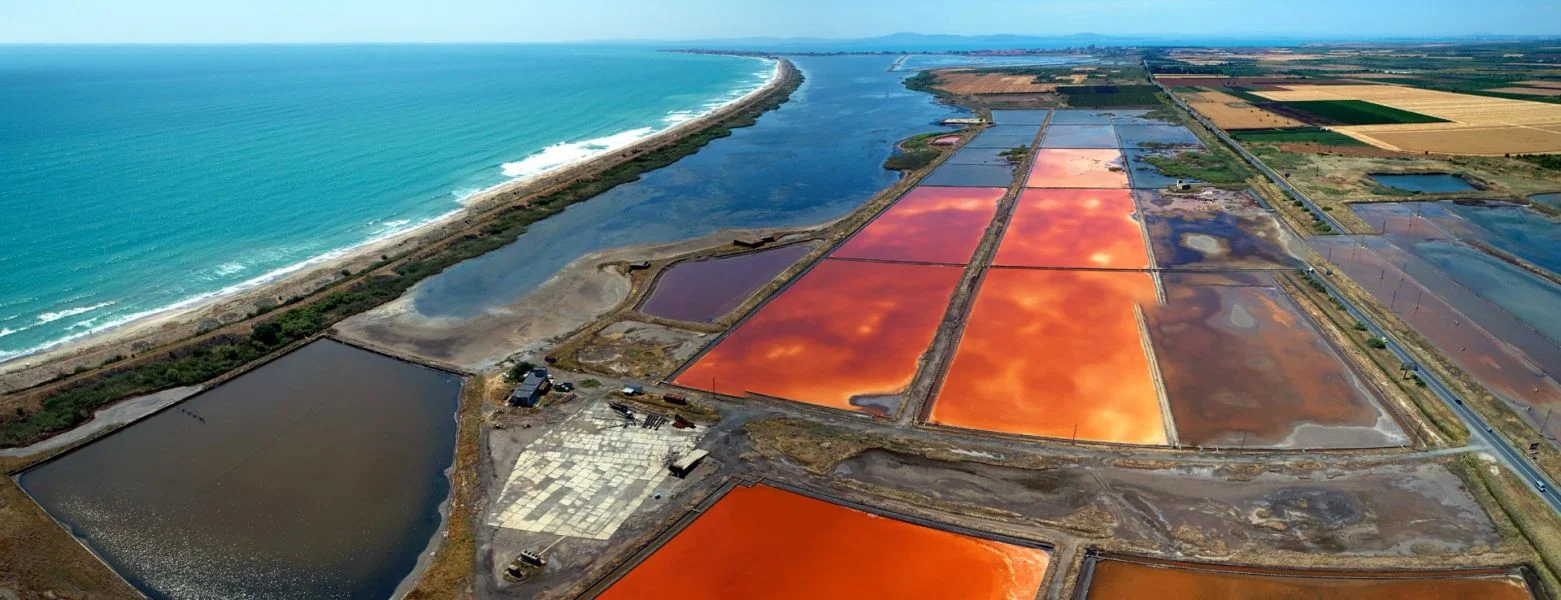
Welcome to Pomorie’s Salt Museum, the only specialized museum in Bulgaria and Eastern Europe for salt production via solar evaporation of seawater. According to historians, salt pans existed here even before the city’s founding around the 5th century BC. In the past, salt was so rare and precious that it was valued as "white gold"—a symbol of wealth, a medium of exchange, and a key subject of trade.
The "Pomorie" Technology – 25 Centuries of Tradition
Before you are 20 decares of active salt pans, still producing salt using the authentic local technology practiced for over 25 centuries. This process is a perfect symbiosis between man and nature. Seawater flows from the sea into the lake, then through a series of smaller evaporation basins to increase its concentration. The final stage occurs in small salt pans 80–100 sq. m, where the sun, wind, and the mastery of skillful salters crystallize the water into white salt. You can witness these technological operations and speak with the salters about the secrets of their craft.
The Museum Exhibition and Tools of Labor
Inside the modern museum building, you can explore the history of salt through a rich collection of photographs from the early 20th century and copies of documents from the 15th to the 19th centuries. Take a close look at the authentic tools on display: wooden salt carts, rakes, and other traditional equipment**,** used by generations of salters. Outside, a restored section of the narrow-gauge railway, once used to transport salt across the region, completes the exhibition. The museum is situated on the narrow strip of land between the Pomorie Lake and the salt pans.
Pomorie Lake – Nature and Healing
The Pomorie Lake is not just for salt production; it is a protected area and part of the Natura 2000 ecological network. It lies on the Via Pontica bird migration route, hosting over 200 bird species. However, its greatest treasure lies at the bottom: unique liman healing mud. Rich in magnesium, hydrogen sulfide, calcium, and bio-hormones, this mud has been used for healing since the times of the ancient Thracians and Romans.
The Magic of Mud and Lye
In addition to the mud, the final product of salt production isBlack Sea lye (luga). It has a dense, oily structure and a high concentration of minerals, particularly magnesium, which is vital for the body. These natural resources are utilized at theSpecialized Hospital for Rehabilitation in Pomorie to treat diseases of the musculoskeletal system, the nervous system, and the skin. Mud and lye treatments act as anti-inflammatories, rejuvenate the skin, and tone the entire organism.
Salt as Art – The "Salt Symphony" Festival
In Pomorie, salt is more than a livelihood; it is an inspiration. Every year, the town hosts the innovative arts festival"Salt Symphony". Salt becomes a metaphor for strength and purification through dance performances like "Salt Wings" (Soleni krile), music concerts, and salt-painting workshops. It is a time when ancient tradition meets contemporary art under the sea breeze.
42.56595, 27.62810