Nesebar during the Ottoman conquest and the Turkish bath
Back to all places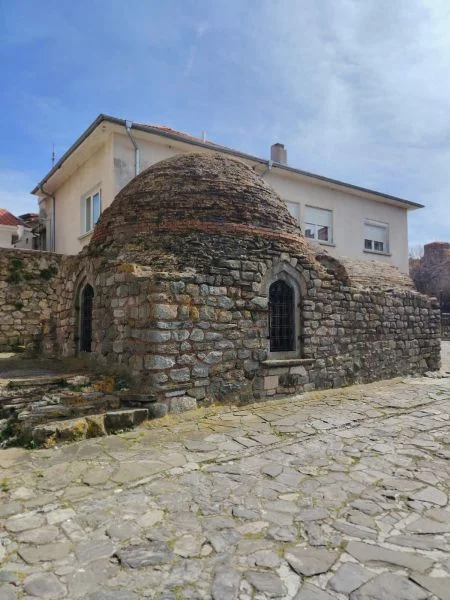
Nessebar was conquered by the Ottoman Turks at the end of February 1453. It was a vital supplier of grain to Constantinopol, which was currently under a long siege. This made Nessebar a crucial strategic point for the Ottoman command. Since the city had surrendered to the conquerors without resistance, they were more merciful and less tyrannical compared to other cities that had been taken after an armed siege. This is also the reason why, three months later, after the Ottoman Sultan Mehmed II, known as “the Conqueror,” captured and devastated the Byzantine capital Constantinople, many inhabitants of that city, including members of prominent imperial families, sought refuge with relatives in the better-preserved Nessebar, located less than 300 km from Constantinople by sea.
However, not long afterward, the population of Nessebar declined drastically, as many of those who had sought refuge there were forcibly returned to Constantinople. Sultan Mehmed II wished to repopulate his new capital on the Bosporus, since the city had been severely devastated and depopulated after its violent conquest.
In the first decades following the Ottoman invasion, the remaining inhabitants of Nessebar became significantly impoverished. To survive, some took on roles in managing or utilizing state revenues, or in collecting the excessively high taxes. Others turned to trade or practiced various crafts they had learned, especially furriery. Over time, some wealthier citizens managed to purchase the title of “archondas,” meaning a leading citizen, thereby securing a measure of peace and easing the burden of their subjugation.
At the same time, nomadic Turkic groups were settled in the immediate hinterland of the city. They seized the most fertile lands for pasture and plundered many of the surrounding monasteries.
To make matters worse, in the 17th century, Cossacks from the territory of present-day Ukraine raided, plundered, and burned the city on three occasions, carrying off many holy relics that had been brought by the previously mentioned refugees from Constantinople and preserved until then with deep respect.
Despite all these hardships endured by Nessebar during this period, the city was not broken. It would later revive and experience a new period of prosperity during the 18th and 19th centuries. The story of this Revival can be heard at the object "Ethnographic museum".
The hammam is a public bathing institution that became a cornerstone of culture in the Islamic world. While deeply associated with Ottoman tradition, it is actually a direct architectural and social descendant of the Roman thermae. As the large imperial Roman bath complexes declined, they were replaced in the Eastern provinces by smaller neighborhood baths, which eventually evolved into the Ottoman hammam. The hammam served a dual purpose: religious and civic. Firstly, it provided a space for ritual ablutions (wudu and ghusl), essential for spiritual purity before prayer, and on the other hand, it functioned as a vibrant social club—a "nerve center" of urban life where people met to gossip, discuss business, or celebrate events like weddings and births. For women in particular, it was one of the few public spaces where they could gather freely away from men.
42.65966, 27.73431